42% of what your company knows lives in one person's head
What the research says about knowledge that never gets written down, and why it hits business rules hardest.
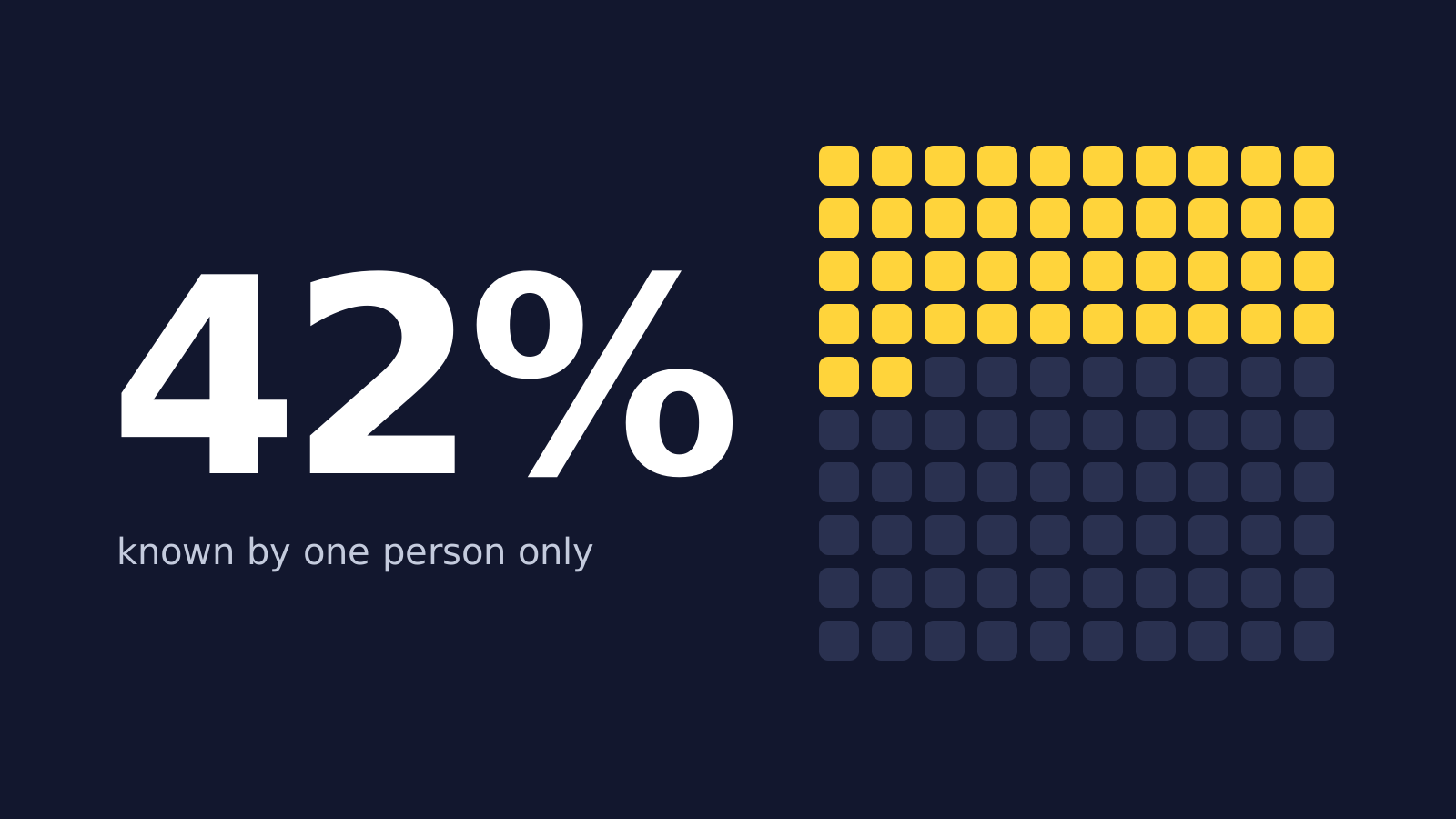
In a survey of US knowledge workers, Panopto found that 42% of institutional knowledge is unique to the person in the role, not shared with any coworker. The same research put the cost of inefficient knowledge sharing at around $47 million a year in lost productivity for a large US business, and found that people lose 5.3 hours a week waiting for information from colleagues.
Those numbers describe all kinds of knowledge. They are worst for one kind in particular: the reasons behind business rules.
Why business rules are the hardest case
A business rule is a decision that a system enforces. The what is always written down, because the code has to say it. The why almost never is. It was obvious to the people in the room, so nobody wrote it.
That makes business rules the purest example of the 42%: completely visible, completely unexplained.
People move on faster than systems do
The US Bureau of Labor Statistics put median employee tenure at 3.9 years in January 2024. Most production systems are older than that. So the normal state of a company is that the people who designed a system have started to leave before anyone needs to change it.
The single-person problem is measurable
Researchers who studied 133 popular open-source projects on GitHub found that 46% depended on a single developer for most of their knowledge, and another 28% on just two (Avelino et al., 2016). The same measure, the “truck factor”, is rarely calculated inside companies, though the same forces apply: one person built it, one person changes it, one person understands it.
What actually helps
Asking people to write more documentation has been tried for decades. It fails for a simple reason: it asks busy people to write a lot, once, with no signal for when it goes out of date.
What helps is asking less and asking better:
- Find the rules that matter, from the systems themselves.
- Ask the person who decided one specific question about each.
- Keep the answer with their name and date, and ask again when the rule changes.
That is the loop AppThentic runs. See How AppThentic works.
Sources
- Panopto, Workplace Knowledge and Productivity Report, reported by HR Dive
- US Bureau of Labor Statistics, Employee Tenure, January 2024
- Avelino, Passos, Hora, Valente, What is the Truck Factor of popular GitHub applications? A first assessment, PeerJ Preprints
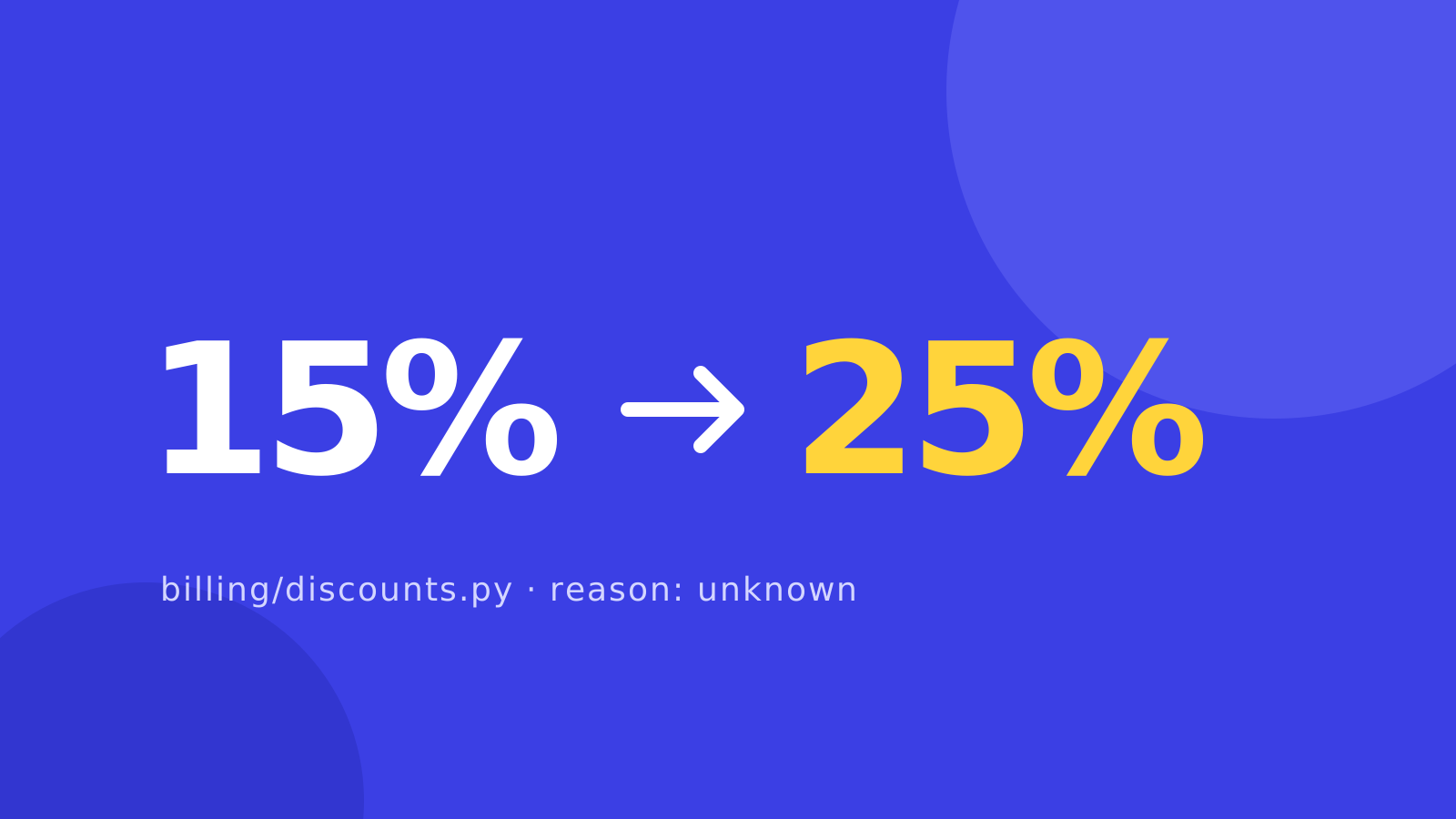 The 15% cap nobody could explain
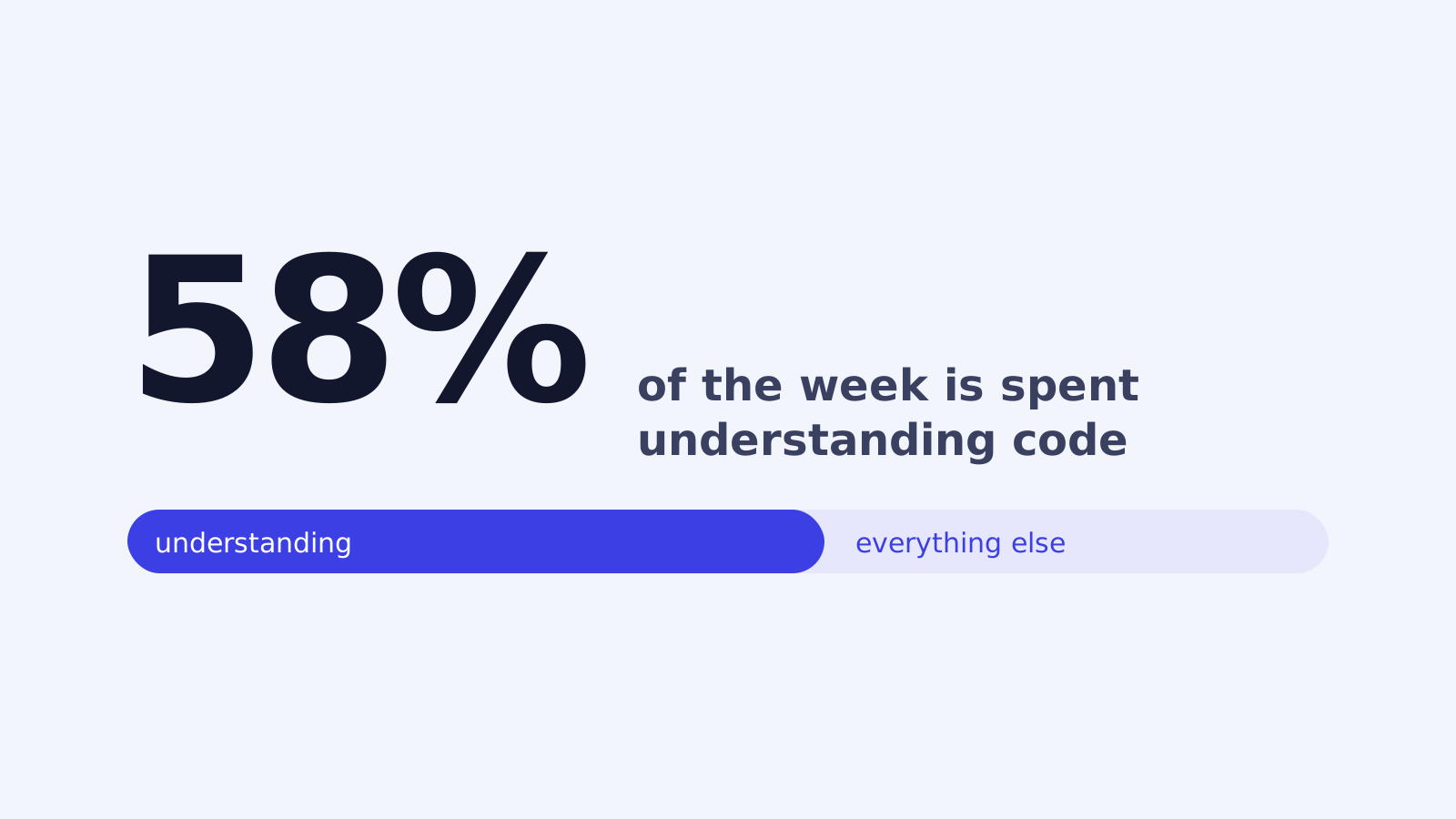 Your engineers spend most of their time understanding, not building